
Dear Readers
We present this report at a moment when the world can no longer afford hesitation in addressing global migration. Migration is a defining force of our time—structural, accelerating, and reshaping societies worldwide. According to the Migration Policy Institute, as of 2024, nearly 300 million people are living away from their home countries, which is almost double the number in 1990. These movements are not temporary; they reflect long-term trends driven mostly by protection needs, economic pressures, demographic shifts, climate impacts, and political instability as well as the desire to find a better life elsewhere. Treating migration as a series of short-term crises has produced reactive responses that cost more, achieve less, and deepen polarization. What is required now is intentional, long-term, and coordinated governance.
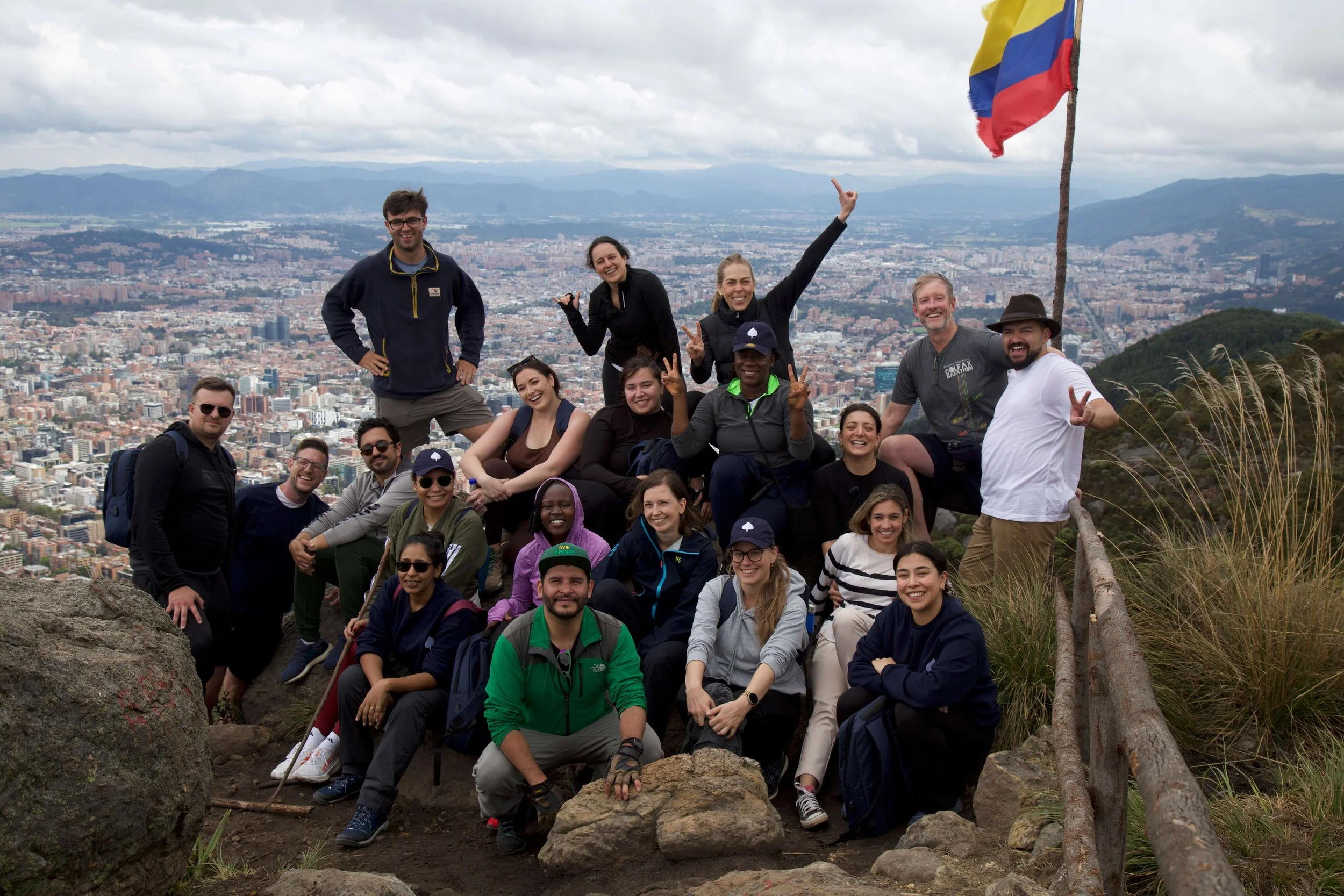
The Aspen Institute International Partners’ “2025 Global Changemakers Workshop”, The Price of Passage, held in Bogotá, Colombia, October 2025, brought together eighteen emerging leaders from fourteen countries across government, multilateral institutions, humanitarian organizations, academia, security, and civil society. Through expert policy roundtables and engagement with international, national, and local stakeholders—including firsthand perspectives on Venezuelan displacement in Colombia—participants developed recommendations that are both principled and practical.
This report advances a central insight: migration is global in its drivers and local in its impacts. The Global Changemakers identify six priority areas for immediate action—recognizing migration as structural; expanding fast and transparent legal pathways; building adaptive, multilevel governance; advancing integration as a two-way process; strengthening social inclusion and public narratives; and linking migration to broader resilience agendas.
The decade ahead will be decisive as discussed in the report. Protection needs are rising as many countries face labor shortages because of their demographic trends, climate volatility, and growing public anxiety. Governments that continue to respond reactively will spend more and accomplish less. Those that invest now in lawful pathways and community-anchored integration will build safer and resilient societies.
We fully endorse this report and its actionable recommendations. To the changemakers, policymakers, national and local governments, business and labor leaders, educators, civil society, and international institutions, we urge you to advance and adapt these approaches within your own contexts. The costs of inaction are measured in lost lives, strained systems, and eroding trust. The benefits of timely, coordinated action and shared responsibility are within reach.
We extend our sincere thanks to the Global Changemakers and the Aspen Institute International Partners for their leadership, urgency, and commitment to meeting the moment.
We look forward to the work ahead.
Maria Eugenia Brizuela de Avila
Former Minister for Foreign Affairs, El Salvador
Faith Akovi Cooper
Regional Director, International Rescue Committee